Why your last home workout fell apart
Think back to the last plan you started in your living room. Odds are it wasn't the burpees that ended it. It was the math. Forty-five minutes, a warmup you had to look up, a cooldown you skipped, and a nagging sense that if you couldn't do the whole thing you might as well do none of it. That all-or-nothing wiring is what kills a free home workout with no equipment faster than sore legs ever could.
The fix isn't more discipline. It's a smaller ask. When the session is short enough that skipping it feels silly, you stop negotiating with yourself every morning. Ten honest minutes you actually do beats a perfect 45-minute program living in a browser tab.
So that's the bet this plan makes. Five moves you already know how to do, no gear, no floor space beyond a yoga mat's worth, and a weekly rhythm built so you can miss a day without the whole thing collapsing.
There's a money angle too, and it's not small. A gym membership runs anywhere from $10 to $60 a month, and that's before the drive, the parking, and the gear you convince yourself you need. The average person who signs up in January has stopped going by spring but keeps paying. A workout that lives on your floor cancels all of that. The only cost is the ten minutes, and you were going to spend those scrolling anyway.
The five moves that cover your whole body
You don't need 30 exercises. You need a handful that hit the big muscle groups, and these five do it. Learn them once and you've got a routine for life.
- Squats. Stand, sit back like there's a chair behind you, stand again. This works your legs and glutes, the largest muscles you've got, so it pays back the most per rep.
- Push-ups. Chest, shoulders, arms, and your core all at once. Can't do one from your toes yet? Drop to your knees, or push off the edge of a kitchen counter. Both count.
- Glute bridges. Lie on your back, knees bent, feet flat, and lift your hips until your body makes a straight line from knees to shoulders. Easy on the joints, and it wakes up muscles that sitting all day puts to sleep.
- Reverse lunges. Step one foot back, drop the back knee toward the floor, stand up. One leg at a time fixes the side that's quietly weaker.
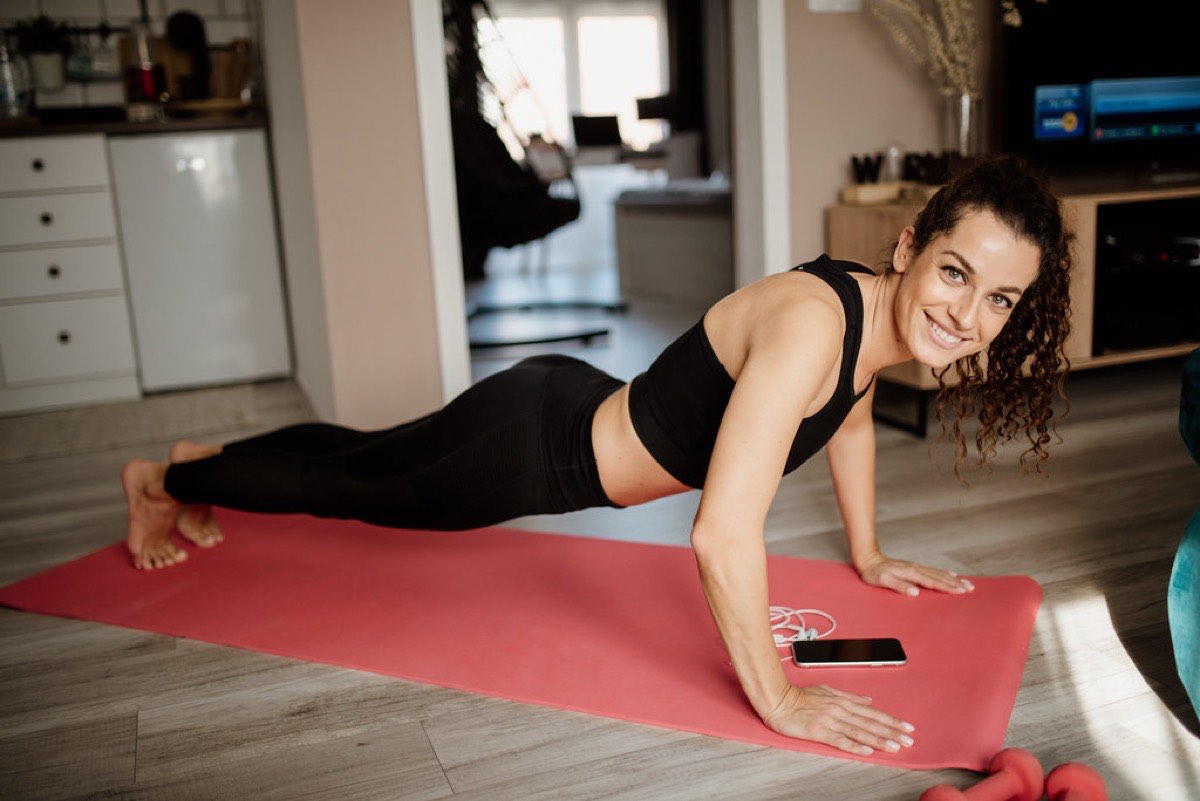
- Plank. Hold the top of a push-up, or rest on your forearms, and keep your body in one straight line. Thirty seconds is plenty to start.
Five moves, top to bottom, and not one of them needs a thing you don't already own.
Ten honest minutes you actually do beats a perfect 45-minute program living in a browser tab. Marcus Powell, Novalyfe
The weekly plan, start to finish
Here's where most articles hand you a wall of sets and reps and lose you. Forget the wall. Do this circuit three days a week, with a rest day in between when you can manage it:
- 10 squats
- 8 push-ups (knees are fine)
- 10 glute bridges
- 8 reverse lunges per leg
- 20-second plank
That's one round. Rest a minute, then run it again. Two rounds is your whole session, and on a busy day one round still counts as a win. As it gets easier, add a third round before you add reps. The federal physical activity guidelines call for muscle-strengthening work on two or more days a week, and three short circuits clears that bar with room to spare.
Want the heart-pumping side too? On an off day, take a brisk 20-minute walk. Walking is the most underrated free workout there is, and it stacks nicely with the strength days without burning you out. The same guidelines suggest about 150 minutes of moderate activity a week, and three or four walks gets you most of the way there. You don't have to hit it all in week one. Build toward it.
One more thing on the schedule. The rest day isn't optional padding, it's where your muscles actually rebuild and get stronger. Training every single day with no recovery is a fast track to feeling beat up and quitting. If you genuinely want to move on the off days, walk or stretch. Save the squats and push-ups for the days you've planned them.
How to actually stick with it past week two
The plan only works if you keep doing it, and week two is where good intentions go to die. A few things make the difference between a habit and a memory.
Pin it to something you already do. Right after you brush your teeth, before your morning coffee, the second you close the laptop at five. Tie the workout to an existing anchor and you stop relying on motivation, which never shows up on the days you need it.
Lower the bar on bad days. Tired, sore, slammed? Do one round. Do half a round. The goal on a rough day isn't progress, it's keeping the streak warm so day two doesn't become day never.
Track it where you'll see it. A wall calendar with an X for each day you train turns your habit into something you can look at. Missing one X stings just enough to get you back the next day. Miss two and the streak's gone, so don't miss two.
Leave the mat out. Sounds dumb, works anyway. A mat already unrolled on the floor is a standing invitation. Tucked in a closet, it's a chore you have to start before you can start.
When to push harder and when to ease off
After three or four weeks, two rounds will start to feel routine. That's your signal, not a plateau. Make the moves harder before you make them longer: slow the lowering phase of each squat to a count of three, pause at the bottom of a lunge, or hold the plank an extra 15 seconds. Tougher reps beat more reps for both strength and the clock.
You should feel worked, not wrecked. A little next-day soreness in a new muscle is normal and fades as your body adapts. Sharp joint pain, a tweak that lingers, or anything that feels off is a stop sign. Rest it, scale the move back, and if it doesn't settle, talk to a doctor before you push on. If you're new to exercise or managing a health condition, a quick check-in with your provider before you start is the smart move.
On the flip side, know when to ease off without guilt. A bad night's sleep, a cold coming on, a week where work swallows everything. Those are fine reasons to do one round or take the day. The people who keep a habit for years aren't the ones who never miss, they're the ones who never let a single miss turn into a month off. Treat one skipped session as a comma, not a period.
None of this asks for a membership, a subscription, or a single dumbbell. Just you, a patch of floor, and a plan small enough that you'll still be doing it next month.