Why your lawn is the most expensive plant you own
Pull up your last summer water bill and look at the spike. For most homes, the jump comes from one place: the grass. Outdoor watering can eat up roughly a third of a household's water, and in hot, dry months that number climbs much higher. A traditional lawn drinks constantly, and it pays you back with mowing, fertilizer, and a bill that stings every July.
The fix isn't a gravel parking lot or a yard full of cactus. The smarter approach is to design around plants that survive on what the sky gives them. The classic name for this is xeriscaping, and these drought tolerant landscaping ideas work just as well in Ohio as they do in Arizona. You keep the color and the green. You just stop paying to keep grass alive in weather it was never built for.
- Lawns are the single biggest water user in a typical yard.
- Most lawn watering is wasted to evaporation, wind, or runoff.
- Swapping even part of the turf cuts the bill right away.
Here's the part that surprises people. You don't lose curb appeal when the grass goes. A well-planned low-water yard reads as lush and full, not sparse. The trick is layering: tall grasses in back, mounding flowers in the middle, and ground-hugging plants spilling over the edges. Done right, neighbors stop you to ask who did the work, and you tell them you did it yourself over a couple of weekends.
Start with the plants that earn their keep
The heart of a low-water yard is plant choice. You want species that shrug off dry spells once they're rooted, and the best ones are usually native to your region. Native plants already survived your local summers long before anyone installed a sprinkler, so they need far less help from you.
A few reliable performers across much of the country:
- Ornamental grasses like little bluestem and feather reed grass move in the wind and need almost no water once set.
- Lavender, Russian sage, and yarrow bloom for months and pull in bees while asking for nothing.
- Coneflower and black-eyed Susan give you that classic flower-bed color on rainfall alone.
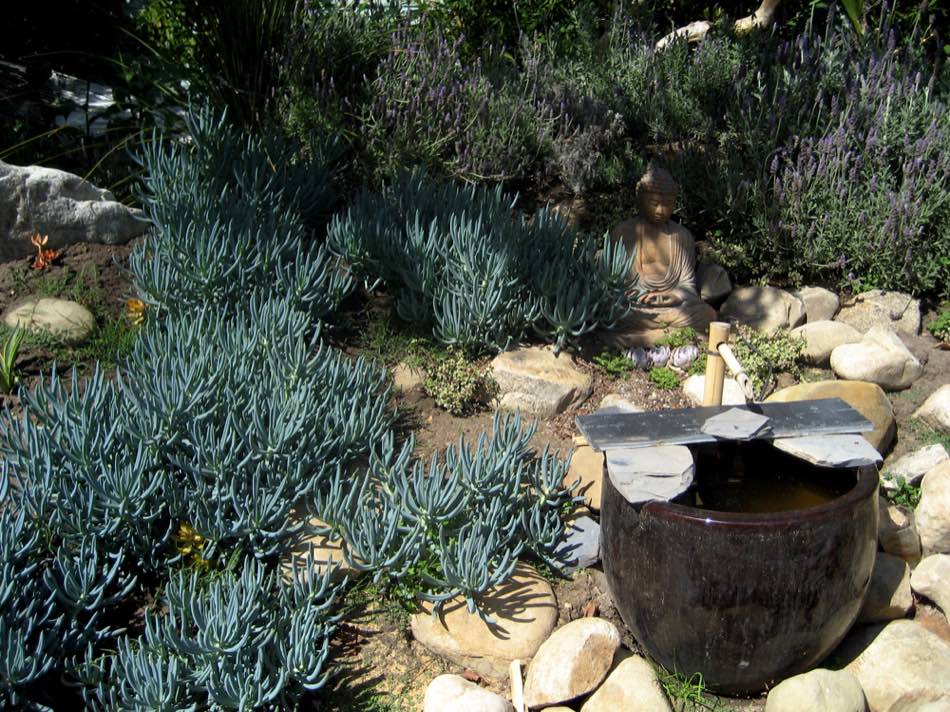
- Sedum and other succulents store their own water and fill gaps where nothing else wants to grow.
Group plants by how much water they actually want. Put the few thirsty ones together near the house where you'll notice them, and let the tough stuff handle the far corners. The EPA's WaterSense program calls this "hydrozoning," and it stops you from overwatering a whole bed just to keep one plant happy.
Not sure what's native to your area? Your local cooperative extension office keeps plant lists sorted by region and sun exposure, and most of that advice is free. A quick search for your state plus "native plant guide" usually turns up a list you can trust more than the generic tags at a big-box garden center. Buy small. Young plants are cheaper, root in faster, and catch up to the larger nursery stock within a year anyway.
A yard built for your climate barely notices a dry July, and neither does your wallet. Novalyfe
Mulch and soil do the quiet, heavy lifting
Plants get the attention, but the dirt under them decides whether your watering pays off. Bare soil bakes in the sun and loses moisture fast. A two to three inch layer of mulch over your beds keeps the ground cooler, slows evaporation, and smothers weeds that would otherwise steal water from the plants you want.
Wood chips, shredded bark, and even fallen leaves all work. Spread it around your plants but keep it an inch or two off the stems so they don't rot. Mulch breaks down over a season or two, feeding the soil as it goes, so plan to top it off once a year.
Soil matters too. Mixing compost into your beds before planting helps the ground hold water like a sponge instead of letting it run off. Good soil plus mulch means you can water less often and still keep everything green between rains.
If your yard slopes, think about where the rain goes. A shallow dip planted with tough perennials, sometimes called a rain garden, catches runoff that would otherwise rush down the driveway and disappear. The water soaks in slowly and feeds the plants for free. It's one of those moves that looks intentional and saves you money at the same time.
Water smarter, not more
Even a low-water yard needs help while it's getting established. The trick is how you water, not how much you stand there with a hose. Watering deep and slow once or twice a week beats a daily sprinkle. Deep watering pushes roots down where the soil stays damp, and deep roots are what carry a plant through a heat wave.
Some habits that stretch every gallon:
- Water early. Before about 8 a.m. you lose far less to evaporation than at noon.
- Use drip irrigation or a soaker hose. It puts water at the roots instead of spraying it into the air.
- Skip the schedule when it rains. A cheap rain sensor or just paying attention saves a surprising amount.
- Aim sprinklers at plants, not pavement. Watering the sidewalk is money down the drain.
A simple soil check tells you when to water at all. Push a finger two inches into the bed. If it comes out damp, wait. If it's dry and dusty, give it a slow soak. New gardeners tend to water on a calendar out of habit, and that habit is exactly what runs the bill up. Let the dirt make the call instead.
Once native and drought-hardy plants settle in, usually after their first full year, many need watering only during long dry stretches. That's the payoff: a yard that mostly takes care of itself.
What it costs and what you get back
You don't have to redo the whole yard in one weekend. Start with the strip by the driveway or one sunny bed that always looks tired. Tearing out a patch of turf, amending the soil, and planting a few dozen drought-tolerant starts is a doable afternoon, and it gives you a feel for what thrives in your spot.
The money side adds up two ways. Your summer water bills drop, often a lot, since the grass was the main culprit. And you spend less on mowing, gas, and fertilizer for the area you converted. Many cities and water utilities also pay rebates when you replace lawn with low-water landscaping, sometimes a dollar or more per square foot, so it's worth a quick call to your water provider before you dig.
There's a smaller payoff too, one you feel rather than measure. You spend fewer Saturdays pushing a mower in the heat. You stop hauling fertilizer bags and worrying about brown patches in August. A native bed mostly wants to be left alone, so the time you used to spend on lawn care turns back into time off.
Give it one season. By the second summer the plants have filled in, the watering tapers off, and you're looking at a yard that stays green on a fraction of what the lawn used to cost. That's the whole point: less work, lower bills, and a space that actually fits where you live.